
You can love Yehovah with all your heart and still have people in your life who are hindering your walk with Him.
You can pray, study Scripture, attend services, and sincerely desire to live a holy life while allowing someone else’s expectations, demands, and opinions to influence your decisions more than the Word of Yehovah.
And sometimes you don’t even recognize what you’re doing.
You tell yourself you’re keeping the peace. You’re being patient. You’re showing love. You’re forgiving because that’s what Yeshua commands you to do.
But somewhere along the way, you’ve confused loving people with allowing them to control you.
You’ve confused forgiveness with giving someone unlimited access to your life. You’ve confused being a peacemaker with accepting mistreatment. And you’ve become so accustomed to putting everyone else’s needs, expectations, and feelings ahead of your own obedience to Yehovah that you don’t recognize the bondage you’re living in.
I know because I’ve lived it.
There was a time in my life when I didn’t understand how deeply unhealthy relationships were affecting my spiritual growth. I had spent years learning to tolerate behavior I should never have accepted. It was familiar. It was normal to me. And even when I began recognizing the problem, breaking those patterns was another matter entirely.
I could walk away from a situation and still carry the same fears, expectations, and learned responses into the next one.
I could establish a boundary and then feel so guilty about it that I would go right back.
And I could cry out to Yehovah for deliverance while holding tightly to the very things He was calling me to release.
I loved Him. I wanted to obey Him. But I hadn’t fully surrendered those relationships to Him.
Then Yehovah began dealing with me about something He called spiritual liabilities.
And that changed the direction of my life.
What Is a Spiritual Liability?
When Yehovah first brought that term to my attention, I began examining the people and relationships in my life differently.
A liability is something that places a burden on you or exposes you to loss. In a spiritual sense, I began to understand that certain relationships were costing me far more than I realized.
They were consuming my peace, influencing my decisions, and interfering with my relationship with Yehovah.
I was spending emotional and spiritual energy trying to manage relationships that continually pulled me away from where He was leading me.
And I had to face a difficult question.
Was I more concerned about keeping certain people happy than I was about obeying Yehovah?
Proverbs 29:25 says, “The fear of man brings a snare, But whoever trusts in the LORD shall be safe.”
That’s a serious warning.
When you’re afraid of someone’s reaction, you may begin making decisions based on what will keep that person satisfied rather than what Yehovah requires.
You may remain silent when you should speak. Agree when you should refuse. Compromise when you should stand firm. Or continue participating in something you know is wrong because you don’t want to deal with the consequences of saying no.
And you can become so accustomed to living that way that you begin calling it love.
But love and fear are not the same thing.
Neither are peace and appeasement.
Galatians 1:10 asks whether Paul was seeking to please men or God. He understood that serving Messiah could not be governed by the desire for human approval.
That’s something I had to learn.
When Yehovah Confirms What He’s Showing You
Not long after Yehovah began dealing with me about spiritual liabilities, I had a conversation with someone who had no idea what I had been praying about.
And that person used the exact term: spiritual liability.
I was stunned.
Then came two statements that stayed with me.
“No is a complete sentence.”
And:
“Don’t be afraid of boundaries. The people who don’t respect them don’t need to be that close to you anyway.”
I believed Yehovah was confirming something He had already been showing me.
But understanding what I needed to do and actually doing it were two very different things.
I had spent much of my life learning to accommodate other people, anticipate their reactions, and do whatever seemed necessary to avoid conflict.
Now I had to learn how to say no.
And I had to learn that someone being unhappy with my decision didn’t automatically mean my decision was wrong.
Why Is Breaking the Cycle So Difficult?
If you’ve spent years in unhealthy relationships, you may find that leaving one doesn’t automatically free you from the patterns you learned while you were in it.
You can change your surroundings without changing the way you respond to people.
You may still expect rejection. You may feel compelled to explain and defend every decision. You may apologize when you’ve done nothing wrong or accept treatment you would never want someone you love to endure.
Sometimes you recognize the problem and still find yourself repeating the same responses.
I know how frustrating that can be.
I also know that recognizing these patterns requires some uncomfortable honesty.
Other people are responsible for the way they choose to treat you. Their cruelty, manipulation, or abuse is not your fault.
But you are responsible for your own conduct and for the decisions you make as you begin recognizing what needs to change.
You cannot control how someone treats you.
You can learn to control how you respond.
Romans 12:2 tells us not to be conformed to this world, but to be transformed by the renewing of our minds.
Consider those words, “renewing of our minds.” That is absolutely profound. Coming out of the world is indeed a spiritual experience, but it also involves the renewing of our minds. The mind has to change, be renewed, and we will be transformed.
Wow.
That tells you just how powerful the mind that Yehovah created for us truly is – and how intimately integrated it is in our walk with Him.
It isn’t enough to recognize that someone else’s behavior is wrong. You also have to examine your mind – what you’ve learned to believe, what you’ve accepted as normal, and how those beliefs are influencing your decisions.
And sometimes that process is painful.
You may have to acknowledge that you’ve allowed fear, guilt, or the desire for acceptance to influence choices that should have been governed by Scripture.
You may have to stop making excuses for behavior you know is destructive.
You may even have to recognize that you’ve been placing someone else’s approval above your obedience to Yehovah.
That last one was particularly difficult for me.
When People Become More Important Than Obedience
Exodus 20:3 says, “You shall have no other gods before Me.”
It’s easy to read that commandment and think only of idols or false gods. But I had to examine something in my own life.
When I allowed another person’s demands to take precedence over what Yehovah was telling me to do, whose authority was I following?
When I knew what Scripture required but was afraid to obey because someone might become angry, reject me, or withdraw their approval, what was governing my decision?
I had to acknowledge that I was giving people a place of authority in my life that belonged to Yehovah.
Yeshua addressed the importance of putting Him first in Matthew 10:37. He said that whoever loves father or mother more than Him is not worthy of Him. That doesn’t mean you stop loving your family. Scripture commands us to honor our parents and love one another.
But no human relationship has the authority to overrule obedience to Yehovah. Not your parents. Not your siblings. Not your spouse. Not your friends. Not someone whose approval you’ve spent your entire life trying to earn.
And here’s something else I had to learn.
You can love someone deeply and still refuse to follow them into disobedience.
That isn’t rebellion against the person.
It’s obedience to Yehovah.
Boundaries Are Not the Opposite of Love
One of the hardest parts of establishing boundaries is dealing with the reactions of people who benefited from the absence of those boundaries.
Don’t assume everyone will be pleased when you begin saying no.
Some people may accuse you of being selfish. Others may question your Christianity, bring other people into the disagreement, or try to make you feel guilty for changing the way you respond to them.
They might even accuse you of being unforgiving. Or you might even hear, “Oh, so now that you are a ‘Christian’ you think you’re better than everybody else.”
And that hurts.
There will be times in the face of all that you’ll be tempted to give in simply because you’re tired of dealing with the pressure.
But you need to understand something.
You can be doing exactly what Yehovah has called you to do and still be absolutely miserable while you’re doing it.
Obedience doesn’t always feel good. Sacrifice doesn’t feel good. We see that when we look at Yeshua’s sacrifice for us.
Sometimes you cry. Sometimes you question yourself. Sometimes you feel like your heart is breaking. Sometimes you’re exhausted. Sometimes you want to give in just to make everybody stop.
That doesn’t automatically mean you’re on the wrong path.
Yeshua never promised that following Him would be easy. In Luke 9:23, He told His followers to deny themselves, take up their cross daily, and follow Him. Sometimes denying yourself means refusing the familiar response that would bring immediate relief but pull you away from obedience.
For me, establishing boundaries didn’t always mean ending relationships or refusing to speak to people. Sometimes it meant declining invitations. Sometimes it meant communicating less frequently or refusing to engage with insulting remarks.
I learned that I didn’t have to respond to every accusation, defend every decision, or attend every argument I was invited to.
There were times when someone made a disparaging remark and I simply responded, “What an odd thing to say.”
And then I moved on.
I didn’t have to participate.
But I also had to learn discernment. Not every disagreement is manipulation. Not every uncomfortable conversation is abuse. Sometimes relationships need honest communication, repentance, forgiveness, and an opportunity to rebuild trust.
And let’s just be real here, sometimes people are simply clueless – especially when they don’t understand you.
Matthew 18:15–17 gives instruction for addressing sin between brethren. And in the verses that follow, Yeshua teaches about forgiveness.
Both matter.
Forgiveness is required. But forgiveness, reconciliation, and restored trust are not identical things.
John 2:23–25 tells us that Yeshua did not entrust Himself to everyone, because He knew what was in man.
He loved people without entrusting Himself indiscriminately to them.
And in Matthew 12:14–15, when the Pharisees plotted to destroy Him, He withdrew.
He didn’t stop doing the work He had been sent to do. He continued healing those who followed Him.
He withdrew from danger without withdrawing from His calling.
There’s a lesson in that.
You can establish appropriate boundaries and continue loving people.
What About the Spiritual Pollution?
This was another part of the process that I had to take seriously.
Some relationships weren’t simply unpleasant. They were affecting my spiritual life. The constant conflict, accusations, guilt, and emotional exhaustion were consuming time and attention that should have been devoted to growing in Yehovah. I was carrying anger, frustration, and fear into other areas of my life. And I began recognizing how easily those things could influence my conduct.
Hebrews 12:15 warns about a root of bitterness springing up, causing trouble, and defiling many.
Proverbs 22:24–25 warns against close companionship with an angry person, lest you learn his ways and set a snare for your soul.
And 1 Corinthians 15:33 reminds us that evil company corrupts good habits.
These Scriptures don’t teach that every struggling person should be avoided or that you become spiritually unclean simply by being near someone who sins. Yeshua ministered to sinners. He showed compassion to people others rejected.
Yeshua touched lepers and ate with sinners.
But Scripture does warn us about influence, destructive conduct, and the consequences of allowing those things to shape our own lives. I had to recognize that some relationships were affecting more than my emotions. And because I had responsibilities to my family and our congregation, I couldn’t consider only what I was willing to endure personally.
Acts 20:28–31 reminds those entrusted with caring for the flock that they must remain watchful and protect the body. Love doesn’t require you to expose the people entrusted to your care to ongoing destructive behavior.
And protecting them doesn’t mean you have stopped loving the person responsible.
The Closed Fist
For a long time, I prayed for Yehovah to change my life.
I wanted to draw closer to Him. I wanted to become more like Yeshua. I wanted to walk in obedience and holiness. But there were things I was still holding on to. Relationships. Expectations. The hope that certain people would finally understand me, accept me, or treat me differently. I wanted Yehovah to transform my life, but I was reluctant to release the things He was showing me I needed to surrender.
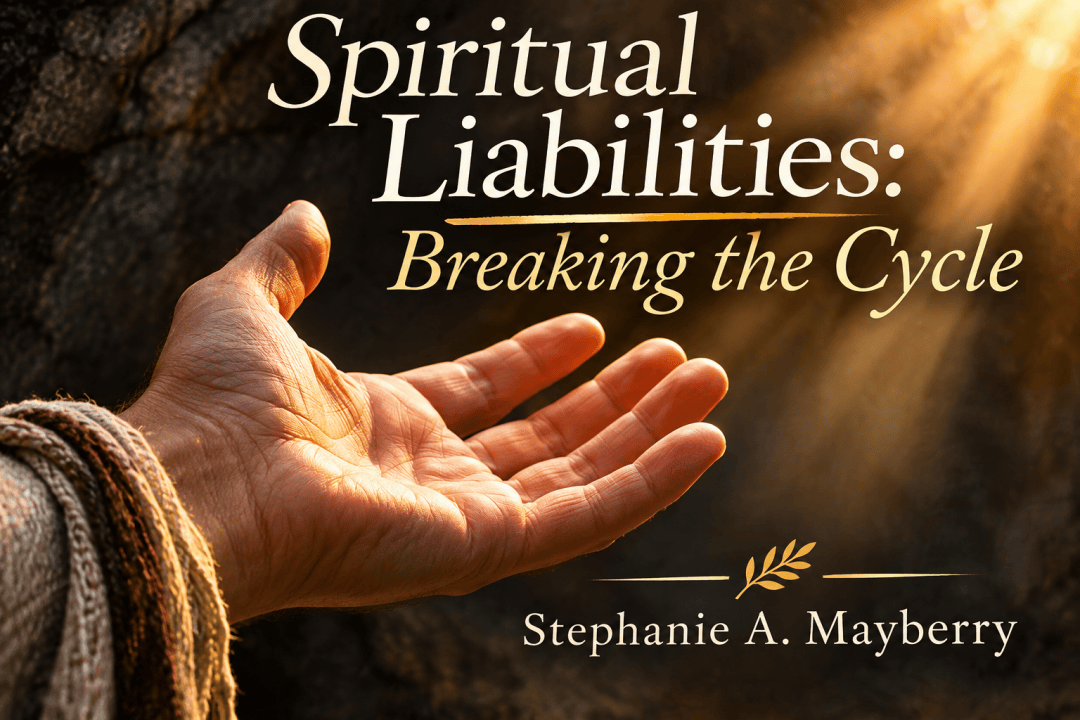
I was handing Him my life with a closed fist.
And the process of opening that fist wasn’t quick, easy, or particularly pretty. There was frustration. There were tears. There were days when I was angry and exhausted and wondered how much more I could take.
I prayed. My husband prayed with me. People who loved me encouraged me and helped me through some very difficult moments. And little by little, I began learning to let Yehovah have what I’d been trying so desperately to hold together.
I stopped trying to force relationships to work.
I stopped pursuing people who were choosing to move away.
I stopped believing that I was responsible for making everyone understand or approve of my decisions.
And I began asking Yehovah to give me the relationships He wanted in my life.
I prayed for a spiritual family.
He answered that prayer.
Over time, He brought people into my life who shared my desire to serve Him. People who encouraged me, prayed with me, and helped me grow. Some unhealthy relationships faded. Some relationships that had been damaged began to be restored.
Not everything happened at once, and not everything happened the way I expected. But I was learning to trust Yehovah with the outcome.
They were moving away, and I stopped chasing them. I opened my fist and let them go.
Learning to Love Without Holding On
Here’s something I don’t want you to misunderstand.
I didn’t stop loving those people. In fact, something quite different began happening.
As Yehovah worked in my life, I began asking Him to help me see people through His eyes. I prayed that He would put His love for them in my heart.
Even the people who had hurt me.
I wanted to understand how He saw them. I wanted to feel compassion rather than bitterness. I wanted to pray for them sincerely and bless them without secretly hoping they would suffer for what they’d done.
And Yehovah began changing my heart.
Luke 6:27–28 tells us to love our enemies, do good to those who hate us, bless those who curse us, and pray for those who spitefully use us. Those commands don’t disappear because someone has mistreated you. But neither do they require you to keep giving someone opportunities to harm you.
I could pray for someone without chasing them.
I could bless someone without agreeing with their behavior.
I could genuinely love someone and still recognize that their choices made a close relationship unhealthy.
And I could leave room for Yehovah to work in their lives without trying to control how or when that happened.
That’s freedom. Not freedom from the responsibility to love, but freedom from the belief that loving someone requires you to hold on to them at any cost.
Let Yehovah Be Yehovah
I want to leave you with something that took me years to learn. You cannot surrender your life to Yehovah while insisting on controlling everything He does with it. If you’re asking Him to draw you closer, to transform you, to teach you holiness, and to help you walk as Yeshua walked, you must be willing to obey when He begins showing you what needs to change.
That may include your attitudes, your habits, your responses, your expectations, or the place certain relationships occupy in your life.
It may require difficult conversations and appropriate boundaries.
It may require repentance on your part.
And sometimes it may require letting go of someone you’ve spent years trying to hold on to.
But don’t confuse surrender with bitterness or rejection. The goal isn’t to become someone who no longer needs or loves people. The goal is to become someone whose love for Yehovah governs every other relationship.
John 15:4–5 teaches us to abide in Yeshua. He is the vine, and we are the branches. Apart from Him, we can do nothing.
And Galatians 5:22–23 describes the fruit of the Spirit, beginning with love.
That’s where I want my life to remain. Abiding in Yeshua. Growing in obedience. Learning to love others with the love He places in my heart.
I haven’t reached a point where there’s nothing left to learn. Yehovah is still working on me, and I am still learning to surrender things I didn’t even realize I was holding. But I can tell you that the life He has given me is far greater than the life I was so afraid to release.
If you’re struggling with a relationship that is hindering your walk with Yehovah, I encourage you to begin with prayer and Scripture. Ask Him to help you recognize what is actually happening. Examine your own conduct honestly. Seek wise, spiritually grounded counsel. Make sure your decisions are governed by His Word rather than anger, fear, or the opinions of other people.
And if He shows you that something needs to change, don’t ignore Him simply because obedience may be difficult.
You don’t have to stop loving someone to establish a boundary.
You don’t have to keep chasing someone to prove you care.
And you don’t have to hold your life together through sheer determination when Yehovah is calling you to surrender it to Him.
Open your fist.
Let Yehovah be your God.
And trust Him with what happens when you finally let go.


