
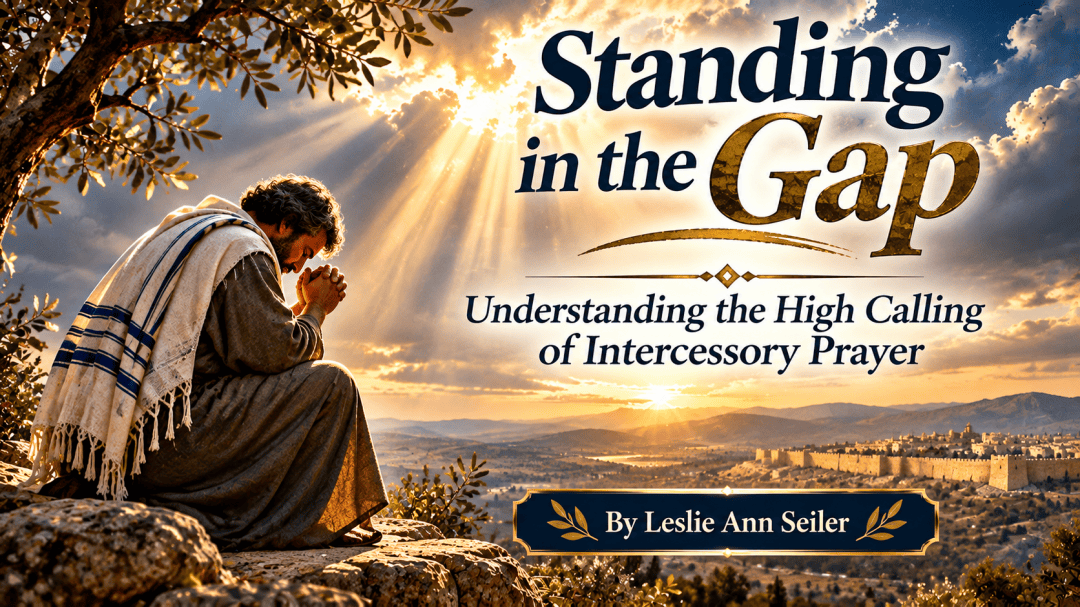
God actively looks for human vessels willing to partner with Him in prayer to bring His purposes into the earth. In Isaiah 59:16, Scripture records that God looked at a broken world and was astonished that there was no human advocate stepping forward to plead on its behalf—so His own arm brought salvation. Intercession begins when we refuse to leave that gap empty.
In 1 Timothy 2:1–3, Paul urges believers to prioritize prayer for all people—especially leaders and those in authority—because this aligns directly with God’s desire for all people to be saved and come to the knowledge of the truth. Yet, when we attempt to pray at this level, we quickly discover our own human limitations. That is where Romans 8:26–27 gives us confidence: when human words fail and we do not know how to pray as we ought, the Holy Spirit steps into our weakness. He prays through us with groanings beyond words, perfectly aligned with the mind and will of God.
Core Truth: Intercession is the high calling through which Yehovah uses surrendered believers to change the world, establishing His Kingdom and advancing His will on earth.
The Four Channels of Prayer
In 1 Timothy 2:1, Paul outlines four distinct dimensions—or “channels”—of approaching God. Understanding the difference keeps our prayer life balanced, clear, and effective:
Prayer (Conversational): General communion, worship, and ongoing fellowship with God—simply talking and listening within a living relationship.
Supplication (Personal & Known Needs): Earnest, specific requests for your own needs or the immediate needs of family, friends, and your local circle.
Thanksgiving (Gratitude & Glory): Giving God glory and honor for who He is and what He has already accomplished, building faith through remembrance.
Intercession (Divine Burden): Yielding to the Spirit of God so He can pray through you for others—often strangers, nations, or unseen crises—until His will is done.
Insights from Seasoned Intercessors
Great apostolic teachers emphasized that intercession is not a casual religious exercise, but a disciplined spiritual partnership:
Verbal Bean (The Channels & the Cockpit): Bean taught extensively on the four channels of approach in 1 Timothy 2:1, noting that believers must keep their spiritual channels clear so the Spirit can flow freely. He described intercession as God inviting a trusted believer “into the cockpit” with Him to carry a specific burden—blending human compassion with the Spirit of God until spiritual birth takes place.
Billy Cole (Faith & Global Reach): Known for vast global revivals, Cole emphasized that Spirit-filled prayer pushes past cultural, geographical, and political barriers. He taught that God does not require a strong or impressive vessel—only an emptied, surrendered one willing to believe His Word and persist until mountains move.
T.W. Barnes (Spiritual Sensitivity & Persistence): Barnes compared consistent prayer to “getting tuned up” so that when human faith touches God, rivers of spiritual power and authority flow. He warned against becoming spiritually dull, urging believers to stay sensitive to the Spirit’s voice and to keep praying persistently until they see spiritual breakthroughs.
The Cost, Conditions, and Weight of Intercession
Heart Posture & Hindrances
Because intercession requires standing before a holy God on behalf of all people (1 Timothy 2:1), unrepented character flaws block the channel. Racism, prejudice, bitterness, pride, or wrong attitudes toward people directly contradict the heart of God. You cannot authentically birth spiritual life for people you look down upon or resent. God requires a clean vessel free of bias before entrusting us with His burdens.
Inconvenient Timing
Intercession rarely operates on our personal schedule. Because it is initiated by God’s Spirit rather than human planning, the burden to pray often interrupts sleep, work, or daily routines. True intercessors remain available even when the call to pray is inconvenient.
The Heavy Burden: Distinguishing Travail from Depression
Carrying a divine burden in the Spirit often feels remarkably similar to depression—marked by sudden heaviness, sorrow, weeping, and deep inward groaning. However, there is a vital difference between the two:
Depression turns inward, leading to hopelessness, isolation, and spiritual paralysis.
Intercessory Travail turns upward and outward; it is a temporary, Spirit-initiated weight that lifts into peace, joy, or breakthrough once the prayer assignment is prayed through.
Biblical Case Study: Daniel
Daniel models every principle of effective intercessory prayer across Daniel 9:1–19 and 10:1–14:
Rooted in the Word (Daniel 9:2): Daniel recognized God’s timing by studying Jeremiah’s prophecies. True intercession aligns with what God has already promised.
Wholehearted Surrender (Daniel 9:3): He responded with fasting, sackcloth, and ashes—setting aside personal comfort to seek God’s face.
Identification with the People (Daniel 9:5–15): Though Daniel was blameless in his personal walk, he prayed “We have sinned,” standing in the gap without judgment or superiority.
Kingdom-Centered Motive (Daniel 9:17–19): He pleaded not for personal relief, but for the sake of the Lord’s name, city, and reputation.
Spiritual Persistence (Daniel 10:2–3, 12–13): Daniel stayed in mourning and prayer for twenty-one days until the angelic messenger broke through spiritual resistance in the heavenly realm.
Reflection Questions
- Which of the four channels of prayer (Prayer, Supplication, Thanksgiving, Intercession) dominates your current prayer life, and which needs intentional growth?
- Why do you think attitudes like racism, partiality, or resentment so severely hinder God from using someone as an intercessor?
- Have you ever experienced a sudden, unexplained heaviness that lifted after you stopped to pray? How do you discern between emotional discouragement and a Spirit-led burden?
- Looking at Daniel 9, what stands out to you about how Daniel approached God on behalf of a nation that had failed?


