If you’ve been trying to understand Hanukkah, you’ve probably encountered enough conflicting advice to leave you with more questions than you started with. Some people insist you should keep it. Others insist you shouldn’t. Then there are the discussions about candles, gifts, the oil story, and whether remembering the event means accepting every tradition associated with it.
I want to give you some historical information and practical considerations so you can examine the subject without being pressured into either position. That way, you can make an informed decision for your family – prayerfully, of course.
Hanukkah isn’t one of the appointed feasts prescribed in Leviticus 23. We should keep that distinction clear from the beginning. It commemorates a historical event, and recognizing that event doesn’t place it on the same footing as Yehovah’s commands. If you’re learning about the commanded feasts, our study guide, What Feasts of Leviticus 23 Do We Still Keep Today?, explains those observances and provides links for further study.
What is being remembered
The historical background is found in the books of Maccabees. We don’t regard Maccabees, or the other books of the Apocrypha, as inspired Scripture. Maccabees is more like a history book. So here, we’re consulting an ancient historical account, not establishing doctrine from it.
Under Antiochus IV, the Jewish people faced attempts to suppress their way of life and compel them to abandon Torah. The account describes prohibitions involving Sabbath, circumcision, and temple worship, along with pressure to eat unclean food. Some complied; others resisted, even at the cost of their lives. The resistance associated with Mattathias and his sons forms the background to the temple’s recovery and rededication. The conflict was about the survival of a people’s covenant practices under coercion, not simply a disagreement over seasonal customs. (1 Maccabees 1:41–64; 2:1–28.)
In 1 Maccabees 4:36–59, Judas and his followers return to a sanctuary that has been desecrated. They mourn what has happened, cleanse the sanctuary, rebuild the altar, restore its furnishings, and resume worship. The dedication begins on the 25th of Kislev and lasts 8 days. Kislev is the 9th month on the biblical calendar. Verse 59 identifies Judas, his brothers, and the assembly of Israel as establishing its annual remembrance.
That’s the basis for calling Hanukkah a historical memorial. In the limited sense of remembering a consequential event, you might compare its purpose with a national memorial observance in the United States. The comparison doesn’t make their histories or customs identical. It helps distinguish a humanly established remembrance from a feast commanded by Yehovah.
The 8 days and the oil story
The familiar account of a small supply of oil miraculously lasting 8 days comes from later rabbinic tradition. It appears in the Babylonian Talmud, Shabbat 21b. We don’t accept that story as the historical foundation for our remembrance.
The earlier dedication accounts already describe 8 days without that explanation. Second Maccabees 10:1–8 connects the rejoicing with the manner of keeping Sukkot, recalling that they had recently spent that feast in mountains and caves. Rejecting the oil legend therefore doesn’t require reducing the historical dedication to a single day. The 8 days are present in the earlier accounts themselves.
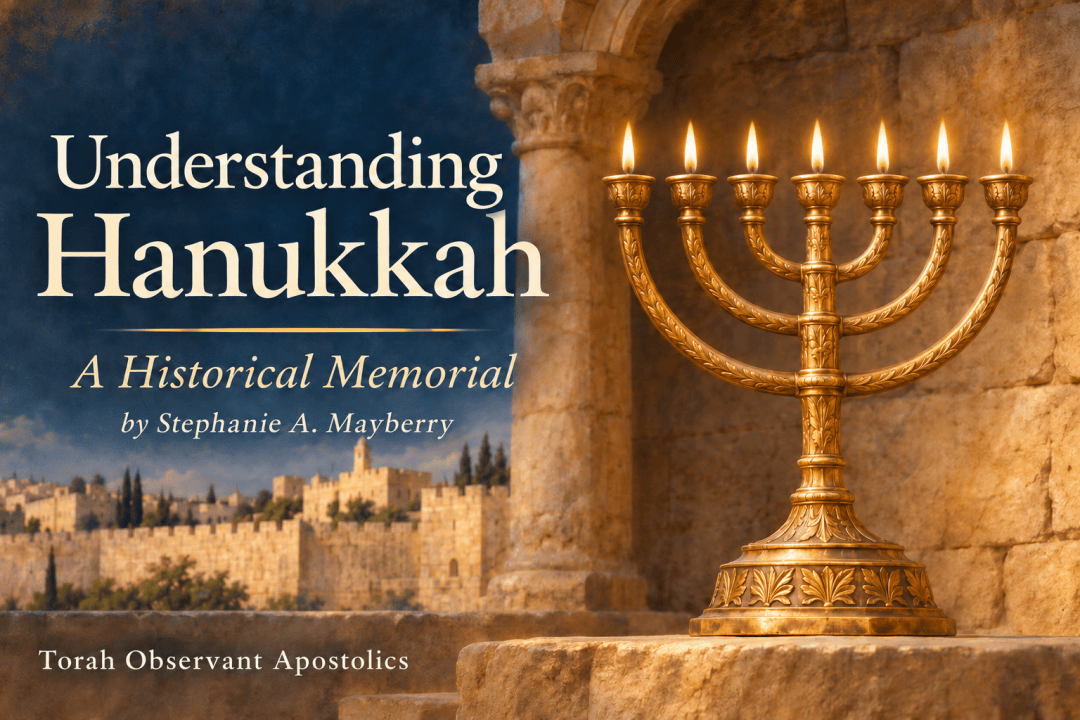
There’s also a distinction between the temple menorah and the later hanukkiah lamp. The menorah described in Exodus 25:31–40 has 7 branches: a central shaft with 3 branches extending from each side. That is the lampstand we would use to illustrate the temple setting. The 9-branch hanukkiah belongs to later rabbinic observance and isn’t the lampstand described in Exodus. We wouldn’t present it or its lighting practices as a biblical requirement for remembering the dedication.
You can study the history without purchasing a lampstand or adopting a candle-lighting ceremony. If you use a 7-branch menorah as a visual teaching aid, explain what it represents rather than inventing a required home ritual around it.
What about Yeshua
John 10:22–23 places Yeshua in the temple during the Feast of Dedication in winter. That is relevant biblical context, and it belongs in the discussion. Those verses don’t provide instructions for a household observance or describe Him following the customs people now associate with Hanukkah.
We can acknowledge what the text records without using it to require everyone to adopt a particular celebration. We also don’t need to attach every later tradition to Yeshua simply because He was present at the temple during the dedication season.
If you choose to remember it
Keep the historical event central. Read the dedication account, explain its background, and talk about what it cost people to resist forced abandonment of Torah. With children, choose details appropriate to their ages. The accounts contain persecution and violence; you can explain the seriousness without describing every brutality.
A shared meal and thoughtful conversation can provide a simple setting. Older children might make a timeline of the events. Younger children could draw the temple lampstand while you explain its purpose. You might discuss what faithfulness looks like when obedience brings pressure, or consider accounts in Scripture of people who refused to abandon Yehovah’s commands.
Prayer, thanksgiving, and examining your own commitment can accompany that conversation. Be clear that these are ways your family has chosen to respond, not additional observances that Yehovah commanded everyone to perform.
Many people use that time to rededicate their lives to Yehovah.
You don’t need 8 nights of presents, elaborate decorations, or a shopping list to give the remembrance substance. If you use children’s books, videos, songs, or crafts, review them first. Many teach the oil legend or assume rabbinic practices that don’t reflect what you intend to communicate.
Most of all, don’t turn Hanukkah into “Jewish christmas.” Leaving christmas doesn’t create an obligation to supply another winter gift festival. If the history disappears beneath shopping, presents, and the effort to reproduce an old holiday atmosphere, reconsider what you’re doing. The people in this account resisted pressure to surrender their obedience. They fought against impossible odds and not only took back the temple but also restored and rededicated it. Their story deserves more attention than a new label on familiar expectations.
Respect conscience and keep the distinction clear
You may choose to learn the history without establishing an annual family observance. You may choose a simple remembrance. You may choose not to participate at all. I’m not here asking you to prove your faithfulness by taking a side. Whether you accept it or reject it, I wanted you to look before you leap.
Don’t violate your conscience to satisfy someone else’s enthusiasm or disapproval. Romans 14:23 gives a serious warning about acting while doubting. At the same time, a comfortable feeling doesn’t establish that every practice is acceptable. Your choices still need to agree with Scripture.
If you remember Hanukkah, be honest about what it is, what it isn’t, and why your family is recognizing it. If you don’t, you can still appreciate the historical significance of resisting coercion and restoring worship after desecration. Neither choice gives you permission to pressure someone else into a tradition or elevate a historical memorial into a command of Yehovah.


